
Exercise Library
Comprehensive Exercise Demos
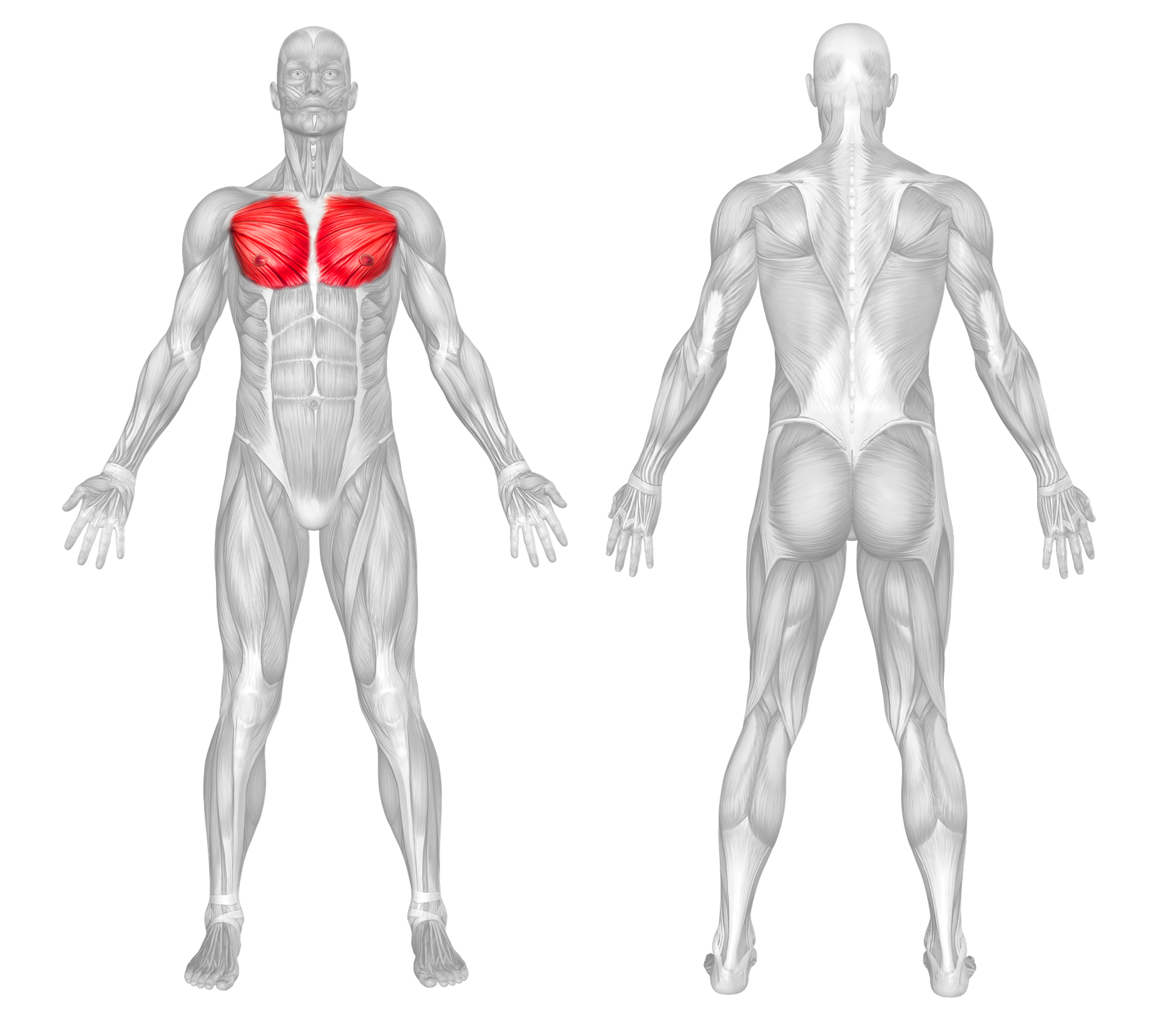
Chest Exercises
Modifications for Pain
Exercise Progression & Variations
Exercise Directory
Push-Ups
Standard Push-Up Tips:
Keep your body level. Engage your core and press up. For best results, breathe and count simultaneously with reps.
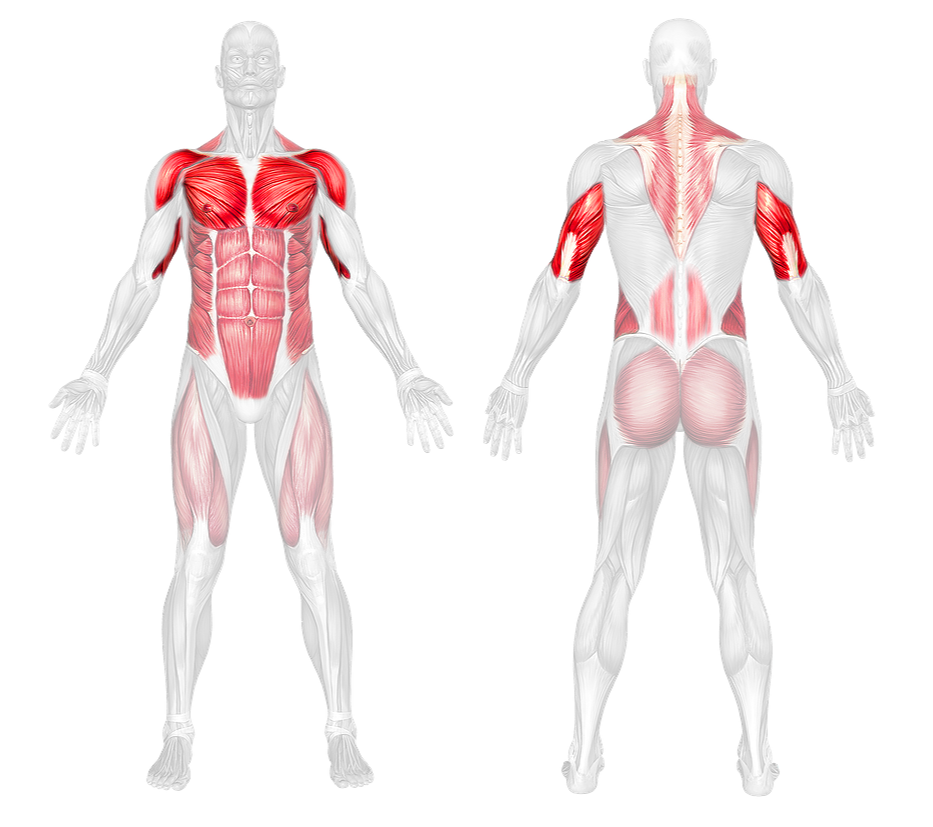
Muscles Worked:
Primary: Chest (pectorals), Shoulders (deltoids), Triceps
Secondary: Core (abdominals, obliques), Back (seratus anterior, traps, rhomboids)
Tertiary: Legs (glutes, quads)
-
Standard Push-ups
Hand Placement: Roughly shoulder-width apart (forearms perpendicular to floor).
Weight Distribution: Standard pushups balance the load between the chest (pectoral) muscles and the triceps.
Benefits: Excellent choice to improve overall upper body and core strength with balanced muscle engagement.
Wide Push-ups
Hand Placement: Wider than shoulder-width apart.
Weight Distribution: Builds a broader chest by focusing on the pectoral muscles more effectively.
Benefits: Builds a broader chest by focusing more on the pectoral muscles.
-
Shoulder Pain: Use a neutral hand position and reduce depth and weight by practicing pushups on the wall, on your knees, or incline push-ups.
Elbow Pain: Adjust your hand position to be slightly wider or more foward than standard position. Keep the elbows tucked and don’t flare them out.
Wrist Pain: Keep wrists in a neutral position by gripping handles, dumbbells, or pushing against your fists instead of your palms.
-
Wall Push-ups
Incline Push-ups on a sturdy elevated surface (counter, bench).
Knee Push-ups: knees on the floor instead of feet.
Standard Push-ups: Full body plank, lower chest towards floor, push back up.
Decline Push-ups: Feet elevated on a bench or box, increasing the load on upper chest and shoulders.
Diamond (Close Grip) Push-ups: Hands close together (forming a diamond) to target the triceps more.
TRX Push-ups: on suspension straps to force greater engagement of your core and stabilizer muscles for balance.
Deficit Push-ups: Hands on yoga blocks or paralettes for a deeper range of motion in the shoulders.
Plyometric Push-ups: quickly push up, lifting your hands off the ground to build speed and explosive power.
Weighted Push-ups: wear a weighted vest or backpack full of books to build pushing strength and core stability.
Want to learn how to do these exercises with the support of a personal trainer? Contact Us
Machine Chest Press
Standard Machine Chest Press Tips:
Keep chin up and chest out. Engage core and press forward. For best results, breathe and count simultaneously with reps.
Wide Machine Chest Press Tips:
Keep chin up and chest out. Engage core and press forward. For best results, breathe and count simultaneously with reps.
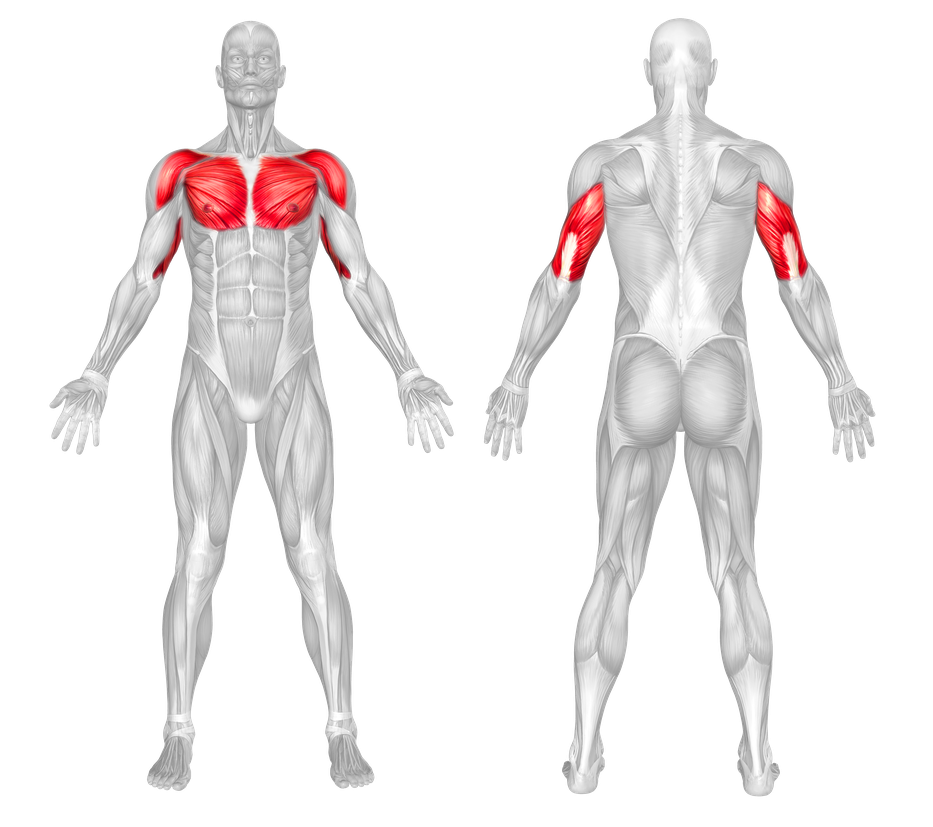
Muscles Worked:
Primary: Chest (pectorals), Shoulders (deltoids), Triceps
-
Standard Machine Chest Press
Grip: Neutral (palms facing each other)
Muscle Focus: Shifts more of the load onto the triceps because the elbow path stays tucked into the body.
Benefits: Reduces shoulder strain, improves wrist comfort, and develops triceps.
Wide Machine Chest Press
Grip: Pronated (palms facing down)
Muscle Focus: Shifts more of the load onto the chest because the elbow path is flared out from the body.
Benefits: Effectively builds chest muscle, especially the outer chest, by increasing pectoral activation and reducing triceps involvement.
-
Make slow movements with light weight that focuses on form to reduce joint stress.
Shoulder Pain: Use a neutral hand position and don't lower the weight so deep that your shoulders roll forward; stop just before you lose tension or feel pain.
Elbow Pain: Use a neutral grip, keep elbows tucked, and limit the movement to avoid the most painful part of the press, especially if pain occurs at the bottom (reduce depth) or top (don't fully lock out).
Wrist Pain: Adjust your grip so the bar rests on the heels of your palms, not your fingers, keeping wrists neutral and aligned with forearms. Fully grip the bar by wrapping your thumb around it for stability.
-
Single-Arm Machine Chest Press addresses imbalances and builds unilateral strength.
Want to learn how to do these exercises with the support of a personal trainer? Contact Us
Dumbbell Chest Flys
Incline Dumbbell Chest Fly Tips:
Keep angle of motion across top of your chest (not eye level). Engage your core and lower back stability muscles. For best results, breathe and count simultaneously with reps.
Seated Dumbbell Up-Flys Tips:
Engage core and lower back stability muscles. Control range of motion at the hips (no swinging). For best results, breathe and count simultaneously with reps.
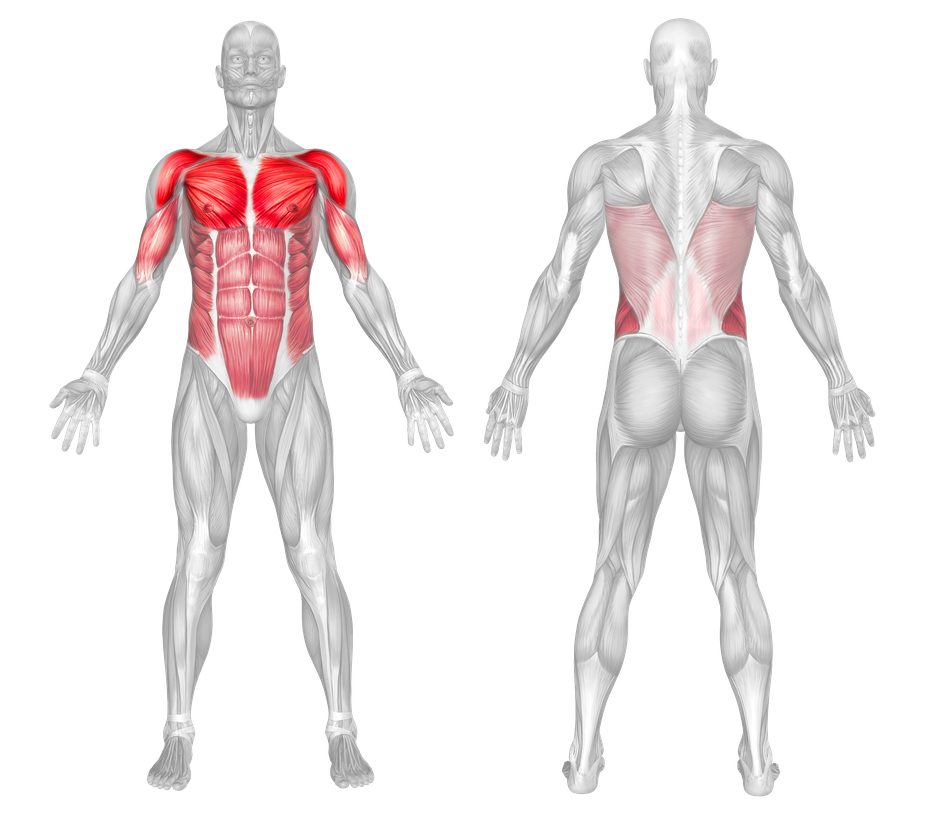
Muscles Worked:
Primary: Chest (pectorals), Shoulders (anterior deltoid)
Secondary: Arms (biceps), Core (abdominals, obliques), Back (lats, erector spinae)
-
Standard Chest Fly
Grip: Neutral (palms facing each other)
Muscle Focus: Performed on a flat bench, this variation targets the middle chest and front of the shoulders.
Benefits: Great for lifters who want a balanced pec size.
Incline Chest Fly
Grip: Neutral (palms facing each other)
Muscle Focus: Performed on an incline bench (set at 30–45° angle), this variation targets the upper chest and front of the shoulders.
Benefits: Emphasizes upper pec development, which improves the look of a full, lifted chest.
Seated Up-Fly
Grip: Supinated (palms facing up)
Muscle Focus: Performed on an incline bench (set at 30–45° angle), this variation targets the upper chest and front of the shoulders.
Benefits: The upward motion specifically targets the clavicular head of the upper chest and improves strength and definition.
-
Make slow movements with light weight that focuses on form to reduce joint stress.
Shoulder Pain: Perform dumbbell chest flys on the floor to limit the backward arm extension. Focus on short range of motion and chest contraction.
Elbow & Wrist Pain: Keep a slight bend in your elbows and use a neutral grip (palms facing each other). Avoid locking out your elbows.
-
Dumbbell Floor Fly is a beginner-friendly option with a limited range of motion, good for those with shoulder issues.
Dumbbell Decline Fly emphasizes the lower chest and is done on a decline bench.
Cable Fly offers constant tension throughout the movement.
Middle Cable Fly focuses on the mid-chest muscles.
Low-to-High Cable Fly focuses on the upper chest muscles.
High-to-Low Cable Fly focuses on the lower chest muscles.
Resistance Band Fly offers linear variable resistance (increasing tension as stretched) causing peak contraction in the muscle. Like cable flys, these can be performed in middle, low-to-high, and high-to-low variations.
Single-Arm Fly isolates each side of the chest, often done with cables, resistance bands, or dumbbells. Requires more core engagement.
Standing Chest Flys engages your core and stabilizers more than seated flys, challenging balance, and offering a full-body functional workout. Can be performed with dumbbells (standing up-fly), resistance bands, or cables.
TRX Chest Fly the unstable nature of the TRX straps forces your core, shoulders, triceps, biceps, and stabilizer muscles to work harder to maintain balance and stability.
Want to learn how to do these exercises with the support of a personal trainer? Contact Us